
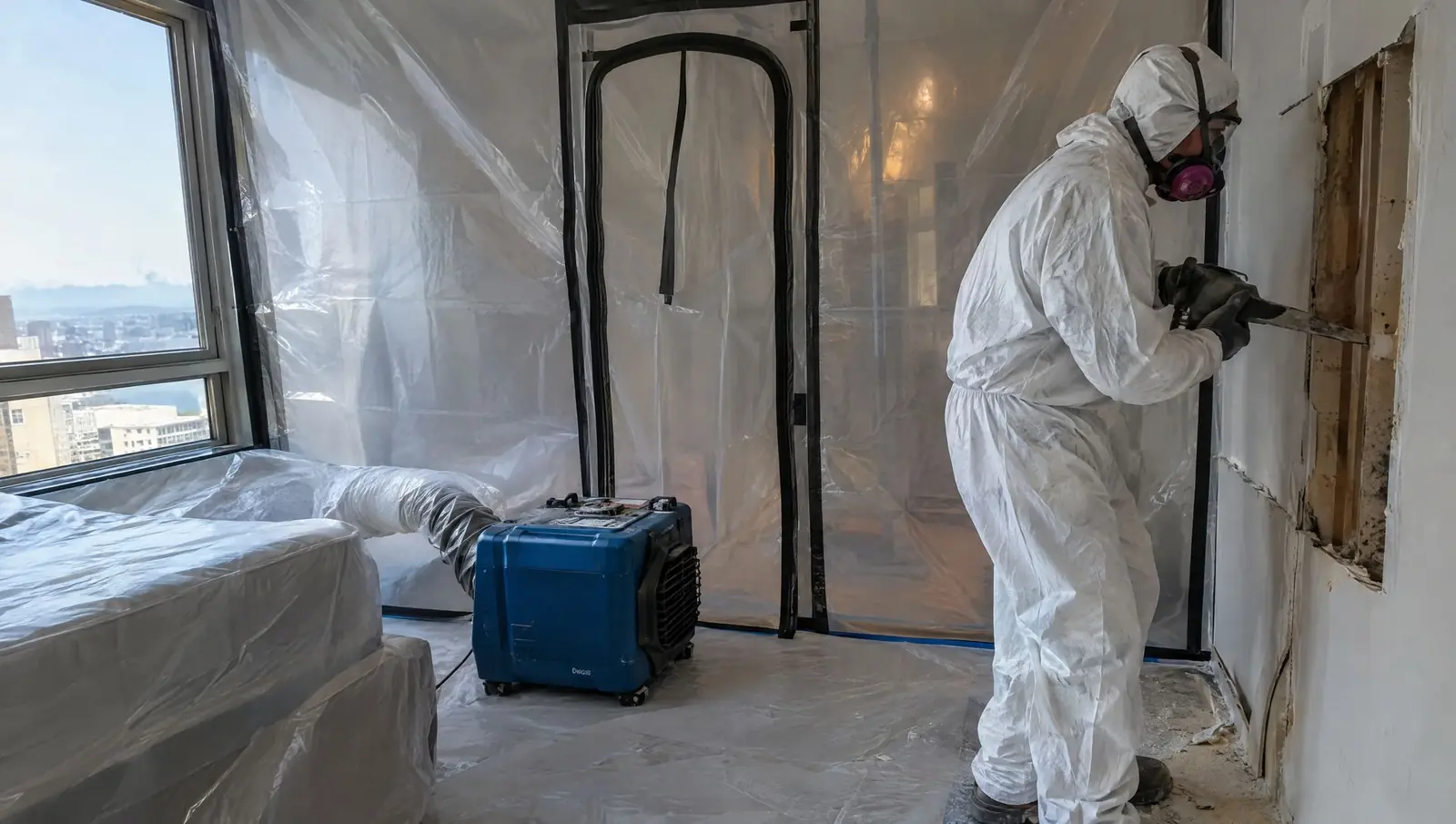
Mold in a condo grows where moisture persists: leaks, condensation, humidity or a past flood that was not fully dried. Fixing the moisture source comes first. Small patches on hard surfaces can be cleaned by the owner, while larger or hidden growth needs containment and professional removal.
Key takeaways
- Mold needs moisture. Without finding and fixing the source, removal is temporary.
- Health Canada has advised that small areas of mold on hard, non-porous surfaces can be cleaned with soap and water, and that larger areas call for a professional.
- Testing helps in specific situations, but no test produces a universal "safe" number. A moisture investigation usually tells you more.
- In a condo, mold can cross walls and floors. Report it to the property manager early, since the cause may be in a shared element.
What causes mold in a condo?
Mold spores are everywhere. They grow when they find sustained moisture, a food source such as drywall paper or wood, and time. In condominiums, the usual moisture sources are:
- Plumbing leaks from supply lines, drains, appliances and fixtures, including slow leaks behind walls.
- Building envelope leaks at windows, balcony doors, caulking, cladding and roofs. See condo exterior restoration and balcony waterproofing.
- Condensation on cold surfaces such as exterior walls and window frames in winter, especially in rooms with poor airflow.
- High indoor humidity from cooking, showers, drying laundry indoors or weak bathroom exhaust.
- Past water damage that was not dried properly. See our checklist for the first hour after a condo flood.
How do you recognize mold?
Signs include a persistent musty smell, visible dark, green, white or fuzzy patches, peeling paint, warped drywall or baseboards, and a stain that returns after cleaning. Hidden mold behind wallpaper, under flooring or inside walls may show only as a smell or unexplained dampness. Visible growth is the part you can see: the moisture problem behind it is usually larger.
When can you clean it yourself?
Health Canada has advised that small patches of mold, under about one square metre, on hard non-porous surfaces such as tile can be cleaned with soap and water, and that you should hire a professional for a larger area. Provincial health agencies give slightly different thresholds, and the right call also depends on the material and the moisture source. Call a professional when:
- The affected area is larger than a small patch, or you can see mold on porous materials such as drywall, insulation or carpet.
- The cause is a leak you cannot locate or fix, or the problem returns.
- The mold is in shared walls, a ceiling cavity or HVAC.
- Someone in the household has asthma, allergies, a weakened immune system or other health concerns. Speak to a doctor about symptoms.
If you do clean small areas, wear gloves, eye protection and a suitable mask, fix the moisture first and do not mix cleaning products.
Should you test for mold?
Testing is a tool, not a verdict. A skilled inspection with a moisture meter and thermal imaging often finds the problem faster than lab samples. Air or surface sampling can be useful to confirm that a cleanup worked, to investigate a suspected hidden source, or to support a dispute or claim. But there is no single accepted "safe" spore count, results vary with the day and the method, and a test that shows spores does not tell you where the moisture is. If you hire a tester, choose one who is independent of the remediation contractor, so there is no conflict of interest.
How does professional mold removal work?
Find and fix the moisture
Locate the source, such as a leak, and repair it. Mold will return if the moisture continues. See leak detection.Contain the area
Seal the work area with plastic barriers and use negative air machines with HEPA filtration so spores do not spread to the rest of the suite or building.Remove contaminated materials
Porous materials with growth, such as drywall and insulation, are usually removed and bagged. Hard surfaces are cleaned and HEPA vacuumed.Dry the structure
Dehumidifiers and air movers bring materials to normal moisture levels, checked with a meter.Clean and verify
Surfaces are cleaned and the area is inspected. Where required, post-remediation testing by an independent party confirms the result.Rebuild
New drywall, finishes and trim are installed once the area is dry and clear.
Professional practice for these steps follows industry standards such as the IICRC S520 Standard for Professional Mold Remediation. See condo mold remediation for how we run these projects in occupied buildings.
What is different about mold in a condominium?
- Shared walls and risers: a leak in one unit can produce mold in the next. Tell the property manager so neighbours can be checked.
- Who is responsible: the corporation generally repairs common elements and the owner repairs the rest, but the cause decides. Read our guide to condo water damage insurance in Ontario, because many policies treat mold differently from sudden water damage.
- Containment matters more: work happens next to occupied suites and shared air systems, so barriers and negative air protect neighbours.
- Access rules: contractors need elevator bookings, insurance certificates and approval from the property manager.
How can you prevent mold?
- Fix leaks and water stains as soon as you notice them.
- Use bathroom and kitchen exhaust fans and keep them clean.
- Keep indoor humidity moderate and wipe condensation from windows.
- Leave some space between furniture and exterior walls.
- Dry any wet area quickly, ideally within a day or two.
Health Canada's guide to addressing moisture and mould indoors has further tips. If you suspect mold in your building, request a free assessment or call (289) 803-2815. This page is general information and not medical advice.
Mold in a condo: common questions
Sources and further reading
- Health Canada: Guide to addressing moisture and mould indoors
- Alberta Health Services: managing indoor mould
- IICRC: ANSI/IICRC S520 Standard for Professional Mold Remediation