
Last updated
Sewage backup cleanup in Toronto is the safe containment, extraction, removal of porous materials and disinfection that follows a contaminated backup in a condo suite or common area. CondoWorks treats it as a health hazard and documents the source for insurers and the corporation.
A sewage backup in a condo can come from a blocked stack shared with other units, a failed ejector pump in the garage, or a municipal sewer surcharge during heavy rain. The water is contaminated with bacteria and pathogens, and it must be treated as a health hazard rather than ordinary flood water.
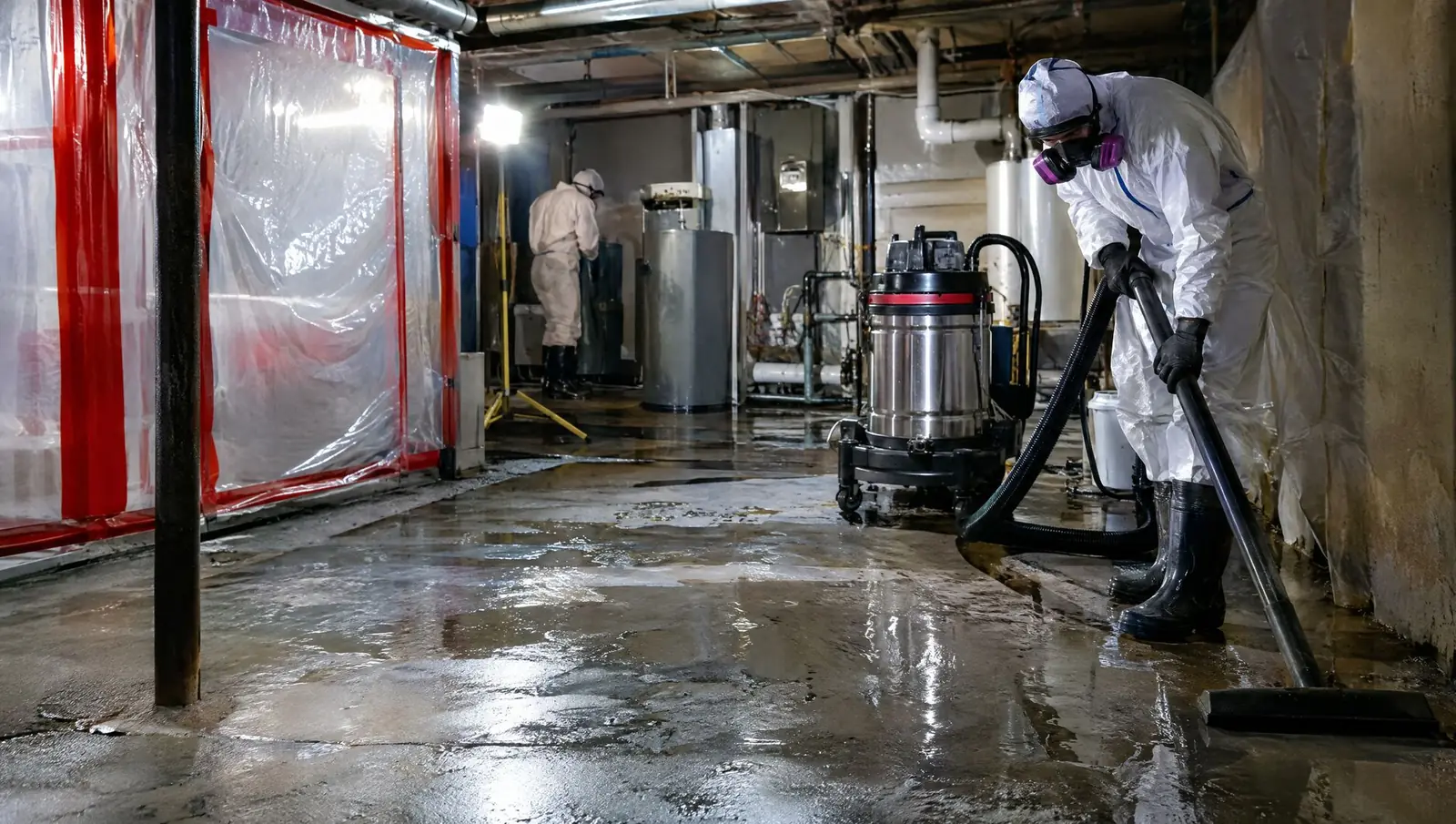
We isolate the affected area with containment, protect occupants and neighbours, and extract contaminated water with appropriate equipment and PPE. Porous materials that cannot be reliably disinfected, such as carpet, underlay, drywall and insulation, are removed. Hard surfaces are cleaned and disinfected.
Because the cause is often outside the unit, we coordinate with building management to find and fix the blockage or pump failure so the problem does not repeat.
What does sewage backup cleanup in Toronto include?
- Containment and negative air where needed
- Extraction of contaminated water
- Removal of porous materials affected by black water
- Cleaning and hospital-grade disinfection of surfaces
- Odour treatment and drying
- Reconstruction and documentation for insurers
Common sources
Shared drain stack
A blockage downstream pushes water into the lowest fixtures in the stack.
Ejector or sump pump failure
Garage and lower-level units are exposed when pumps fail.
Storm surcharge
Heavy rain overloads combined or old sewer lines.
How sewage backup cleanup works, step by step
Isolate
Close the area and protect occupants.Extract
Remove contaminated water.Remove
Take out porous materials that cannot be cleaned.Disinfect
Clean and treat all remaining surfaces.Dry and rebuild
Dry the structure, then restore.
Health risks of sewage and why professional cleanup is required
Sewage contains bacteria, viruses, parasites and chemical contaminants. Contact with skin, inhalation of aerosolized droplets and contamination of food surfaces can cause illness, particularly for children, older adults and anyone with a weakened immune system. Water that has touched sewage, called Category 3 or black water in the restoration industry, is considered unsafe for any unprotected contact.
Professional cleanup uses personal protective equipment, controlled work zones, appropriate extraction equipment and approved disinfectants. Waste is bagged and disposed of in line with regulations. Householders cleaning up sewage with towels and household products usually do not remove contamination from porous materials and can spread it to other parts of the unit.
How a backup happens in a condo
Condominium plumbing systems differ from a house. Several units share vertical drain stacks that discharge into the building's main sewer line. A blockage or a surge in the stack or main can force wastewater up through the lowest drains, usually floor drains, tubs, showers and toilets in the lowest units. In buildings with garages or lower levels, sewage can also back up through floor drains and sump or ejector pits.
Other causes include grease and wipes accumulating in the stack, tree roots or collapsed pipes in the lateral to the street, municipal sewer surcharge during heavy rain, and failed ejector pumps that serve below-grade plumbing. Identifying the cause matters for two reasons: it affects who is responsible for correcting it, and it affects the risk of recurrence. We document the condition with photos, and we recommend that building management call a plumber to inspect the stack or line if a blockage is suspected.
The cleanup process step by step
Our protocol for sewage backups follows consistent steps:
Safety and isolation
Residents and pets are moved out. The area is closed off with plastic barriers, and ventilation is controlled to avoid spreading airborne contamination.Extraction
Standing sewage is removed with pumps and wet vacuums, and surfaces are rinsed.Removal of porous materials
Carpet, underlay, drywall, insulation and cabinet toe-kicks that have absorbed black water are removed and bagged.Cleaning and disinfection
Hard surfaces and structural elements are cleaned, then treated with an appropriate disinfectant at the required contact time.Drying and deodorizing
The structure is dried with air movers and dehumidifiers, and odours are treated with air scrubbers and sealing as needed.Verification and rebuild
Surfaces are verified clean and dry, and reconstruction begins.
Contents are assessed individually. Hard, non-porous items can often be cleaned, while soft furnishings usually cannot.
Insurance and responsibility
Coverage for sewage backup varies and is often a separate endorsement on a homeowner or condominium unit owner policy. Whether the corporation's insurance, the owner's insurance or both respond depends on the cause, the policy wording and the declaration. We do not decide coverage, but we help by documenting the source, the extent, and the cleanup in detail, including photographs, estimates and an itemized invoice.
Report the loss to the property manager and your insurer promptly. If the backup came from a common stack, other units may be affected, and the corporation will need to coordinate repairs. Keep receipts for temporary accommodation and other expenses, since some policies cover them.
Preventing recurrence
Some measures help owners reduce the risk. Do not flush wipes, even those labelled flushable, and do not pour grease down kitchen drains. Ask management about the building's drain maintenance, such as periodic stack cleaning and camera inspection. In lower-level units, a backwater valve or alarm on floor drains may be an option, subject to the corporation's approval. If the unit is in a building with an ejector pit, management should confirm that pumps and alarms are tested regularly.
Common-element versus unit-level sewage events
When sewage appears in a unit, the first question is whether the problem is inside the unit or in the building's system. A blockage in the unit's own drain branch, such as a toilet trap, usually affects a single fixture and is the unit owner's responsibility. A blockage in the shared stack or main line typically affects several units or the lowest ones, and is generally the corporation's responsibility. Floor drains in garages and lower levels may back up when a sewer main or ejector system fails.
A plumber's camera inspection is the best way to confirm the cause. We recommend that building management call the corporation's plumber promptly, as clearing the blockage stops further backups and protects other units. Meanwhile, we handle containment, extraction and cleanup. The findings go into the documentation for owners, the corporation and insurers.
Contents, personal belongings and what can be saved
Sewage contamination affects belongings differently. Non-porous items such as glass, metal, hard plastic and sealed ceramics can usually be cleaned and disinfected. Porous and semi-porous items such as upholstered furniture, mattresses, carpets, books, papers and untreated wood generally cannot be reliably disinfected and are discarded. Valuable or sentimental items can sometimes be treated by specialists, such as for documents or artwork.
We photograph and list affected contents, which supports the insurance claim, and we keep items that the insurer wants to inspect until they have approved disposal. We advise on safe handling and do not recommend that residents pick through contaminated items without protection.
Questions to ask before hiring a sewage cleanup company
Sewage cleanup is a health-related service, and standards differ between providers. Useful questions include:
- Do you remove porous materials or just clean them? Carpet, underlay and wet drywall exposed to black water should be removed, not treated in place.
- How do you contain the area? Look for barriers, controlled airflow and protection of unaffected rooms.
- What disinfectants and contact times do you use? A professional will name the product class and explain that it must stay wet on surfaces for a set time.
- How is waste handled? Contaminated material should be bagged and removed under proper procedures, not dropped in a shared building bin.
- Will you document the work for my insurer? Photos, scope and invoices are essential for claims.
- How do you verify the area is clean and dry? Ask for moisture readings and a final inspection before rebuild begins.
The short version
Sewage cleanup is a health response first and a repair second. Keep people out, call building management, call professionals, remove porous materials, disinfect and dry fully, and fix the cause so it does not repeat. CondoWorks handles the cleanup and the rebuild, and documents the source and the work so your insurer and the corporation can settle responsibility on facts.
Sewage backup cleanup across the Greater Toronto Area
We take sewage backup & flood cleanup projects in Markham, Downtown Toronto, Etobicoke and across the rest of Toronto and the Greater Toronto Area. Related services you may need alongside this one: emergency condo restoration, biohazard and trauma cleanup, condo odour removal and air filtration, water damage restoration and condo mold remediation.
Ready to start? Request a free assessment, learn about CondoWorks or check our service areas.