
Last updated
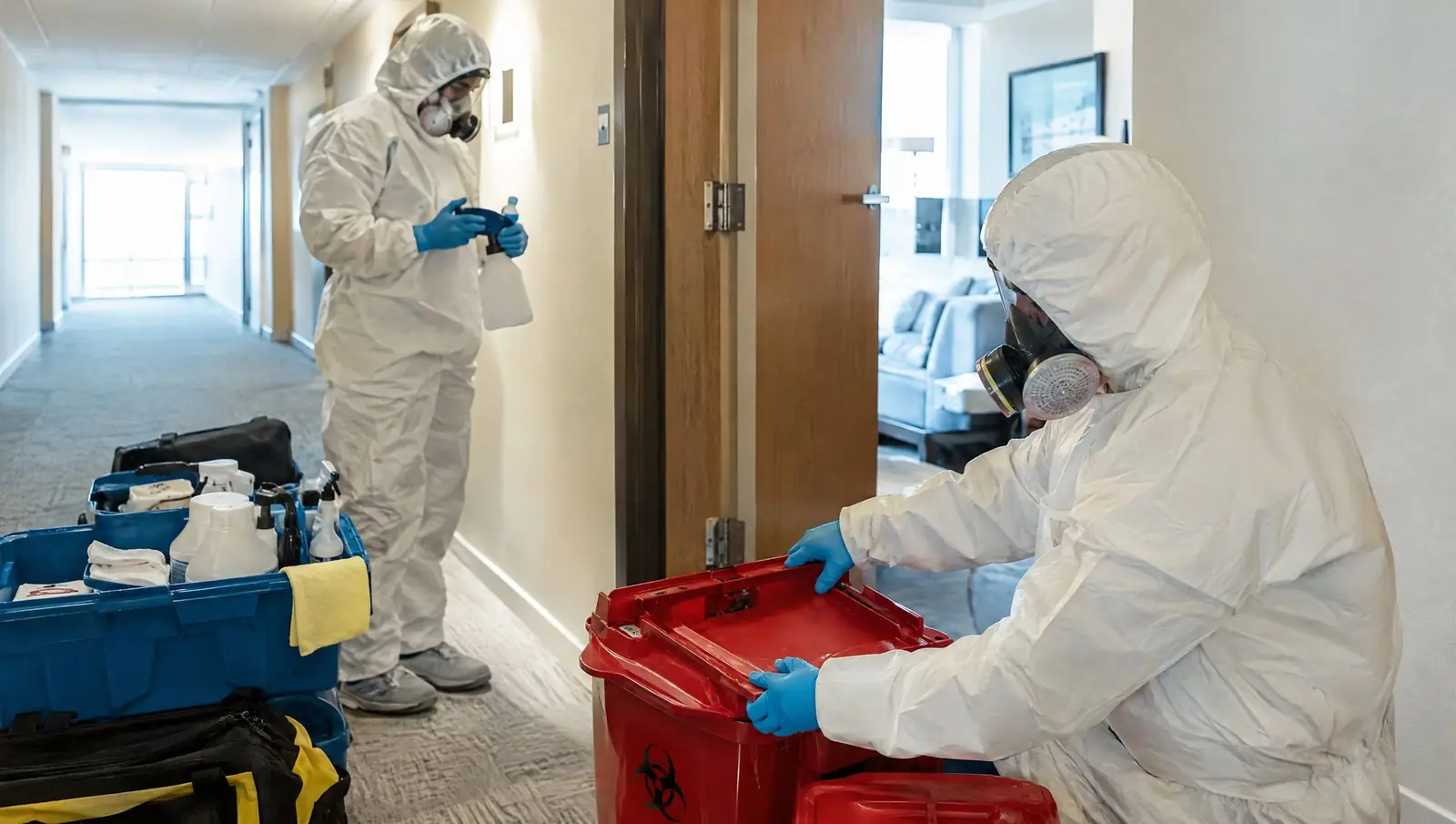
Biohazard and trauma cleanup in Toronto is the discreet removal and disinfection of blood, bodily fluids, decomposition and unsanitary conditions in a condominium suite. CondoWorks uses protective equipment, regulated waste handling and odour treatment, then rebuilds if needed.
Biohazard events are difficult for families, neighbours and property managers. Blood, bodily fluids and decomposition can contaminate flooring, subfloor and walls, and odour can spread into corridors and neighbouring units. Cleanup requires protective equipment, regulated waste handling and thorough disinfection.
We work discreetly. Crews arrive in unmarked vehicles where requested, communicate with property management on a need-to-know basis, and treat the space and the people connected to it with respect.
Beyond trauma scenes we handle hoarding cleanups and other contaminated conditions in suites, in coordination with the corporation, family and any agencies involved.
What does biohazard trauma cleanup in Toronto include?
- Containment and safe entry
- Removal of contaminated materials
- Disinfection with hospital-grade products
- Regulated disposal of biohazardous waste
- Odour removal and air treatment
- Rebuild and restoration of finishes
Situations we handle
Trauma scenes
Cleanup following injury or violent events.
Unattended death
Decomposition cleanup, odour removal and material replacement.
Hoarding and unsanitary conditions
Staged cleanup with sorting, removal, sanitizing and repair.
How biohazard trauma cleanup works, step by step
Confidential call
Share what you can; we ask only what is needed.Assess
Plan safe entry and waste handling.Clean
Remove contaminated material and disinfect.Deodorize
Treat air, surfaces and structure.Restore
Repair finishes and return the suite to use.
What counts as a biohazard in a condominium
A biohazard is any biological material that can carry disease or cause harm. In residential buildings, the most common situations are blood and body fluids after injury or violence, unattended death in which decomposition has begun, sewage and other contaminated water, hoarding conditions with decaying material, pest infestations with droppings and carcasses, and drug-related contamination. Each presents different hazards, from bloodborne pathogens to mold and airborne contaminants.
Condominiums add complications. Odour and fluids can travel into other units and common areas, neighbours may be affected or alarmed, and the corporation is concerned about its other residents and its reputation. We work with discretion and keep communication limited to those who need to know.
Our approach: safety, discretion and respect
People who call us are often in distress, and many are family members who never expected to deal with a situation like this. We talk through the process in plain terms and let you decide how much detail to hear. We arrive in unmarked vehicles when asked, move quickly through shared spaces and limit conversation with neighbours and staff.
Safety comes first. Technicians use personal protective equipment, follow protocols for handling sharps and other hazards, and manage waste according to regulations. We do not remove personal belongings of sentimental value without discussing them, and we help families identify and recover important documents and keepsakes where they can be safely cleaned.
The cleaning process
Cleanup involves more than surface wiping, because fluids penetrate porous materials. The steps are:
- Assess the scene and set up containment so contamination does not spread to other areas.
- Remove bulk contamination and any contaminated items and materials such as bedding, carpet, upholstery and underlay.
- Remove affected flooring, drywall or subfloor if fluids have penetrated.
- Clean surfaces thoroughly, then apply a hospital-grade disinfectant for the required contact time.
- Treat odours at the source with cleaning, sealing and air filtration, including ozone or hydroxyl treatment in suitable cases.
- Dispose of regulated waste through licensed channels.
- Verify the result visually and, where appropriate, by testing surfaces.
After cleaning, we can rebuild the unit to a condition suitable for sale, rental or the family's use.
Hoarding and unsanitary conditions
Hoarding is a mental health condition, and cleanup should be handled with sensitivity. Our approach is gradual and cooperative: we work with the resident, family or agencies, assess safety hazards such as blocked exits, structural stress, fire risk, pests and mold, and plan a staged clearance. Items are sorted into keep, donate, recycle and dispose of categories, with the resident's decision wherever possible. After clearance, we clean and sanitize, treat pests with licensed partners and repair damage. Property managers and the corporation may require evidence of progress, and we provide documentation.
Insurance, reporting and the corporation
Some policies cover biohazard cleanup, particularly when it follows a covered event. Coverage varies, and we provide itemized documentation to support claims. Unattended deaths and certain events may involve police, coroner or public health authorities, and cleanup should begin only after they release the scene. The corporation may need to know for access and liability reasons, and we coordinate with the property manager on what is shared. We never discuss the circumstances with other residents.
Pathogens, protective equipment and waste regulations
The main health concern at trauma scenes is exposure to bloodborne pathogens, such as hepatitis B, hepatitis C and HIV, which can survive in dried blood for varying periods. Decomposition adds bacterial contamination and airborne compounds. Technicians follow universal precautions, which treat all blood and body fluids as potentially infectious. This includes gloves, eye protection, full-body suits, boot covers and respirators selected for the hazard.
Waste is a regulated stream. Items saturated with blood or body fluids, sharps and certain contaminated materials are packaged in labelled containers and handled by licensed biomedical waste carriers for disposal. Documentation of that chain is kept and provided on request. Proper handling protects workers, building staff, waste handlers and the public.
Tools and equipment are decontaminated after each job, and workers follow decontamination procedures on leaving the area, so contamination is not carried into elevators, corridors or vehicles.
Odour, structure and why porous materials matter
Fluids from a trauma or decomposition scene move through porous materials faster than most people expect. Blood and body fluids can pass through carpet and underlay into the subfloor, through grout lines and into concrete or wood, and along baseboards into wall cavities. Even if the surface looks clean after wiping, the contamination left below keeps producing odour and risk.
We therefore check beneath visible stains, using moisture meters, UV lights and probing where appropriate, and we remove flooring and wall materials as needed to reach the extent of contamination. Concrete and sealed surfaces can often be cleaned and disinfected; wood and drywall often need replacing. After removal, we apply sealants to remaining structural surfaces, which locks in any residual odour and prepares the area for rebuilding.
Air treatment completes the work. HEPA and carbon filtration run through the process and afterwards, and odour-neutralizing technologies may be used to treat remaining airborne compounds.
Supporting families and property managers through the process
For families, the cleanup is one task among many. We offer clear explanations, a written scope and a realistic timeline, and we handle building coordination on your behalf. If the unit must be vacated, emptied or prepared for sale, we can coordinate with restoration, junk removal and reconstruction in one project. For property managers, we provide a brief written summary of the work performed and the condition of the unit on completion, which can be filed for liability and building records. Information about the event itself stays confidential.
What to ask a biohazard cleanup provider
Because families often call in urgent circumstances, it helps to know what a trustworthy provider looks like:
- Do you use protective equipment and follow pathogen protocols? Technicians should wear full protective gear and explain their precautions.
- How do you dispose of waste? Regulated waste should go through licensed carriers with records available.
- Is the service discreet? Ask about vehicles, communication and how information is shared with the building.
- Will you remove contaminated flooring and subfloor if needed? Surface cleaning alone often leaves odour and risk beneath.
- Can you rebuild the unit afterwards? A provider that also restores avoids handoffs and delay.
- How will you work with my insurer? Itemized documentation matters if a policy responds to the loss.
The short version
A biohazard event in a condo needs three things done well: safe, regulated cleanup; removal of contaminated porous materials rather than surface wiping; and discretion towards the family, neighbours and building staff. If you are dealing with this now, call us. We will explain each step, coordinate with property management on only what is necessary, and rebuild the unit once cleaning and odour treatment are complete and verified.
Biohazard trauma cleanup across the Greater Toronto Area
We take biohazard & trauma cleanup projects in Markham, Downtown Toronto, Etobicoke and across the rest of Toronto and the Greater Toronto Area. Related services you may need alongside this one: sewage backup cleanup, condo odour removal and air filtration, condo suite renovation, emergency condo restoration and asbestos testing and abatement.
Ready to start? Request a free assessment, learn about CondoWorks or check our service areas.