Last updated
Condo insurance claims support in Toronto is the documentation and scoping that helps adjusters settle a loss: dated photos, drying logs and itemized estimates separated by unit. CondoWorks supplies the record for both the corporation's and the owner's insurer.
Condominium insurance is split. The corporation insures the building and, usually, the standard unit as originally built; the owner insures contents, improvements and betterments, and any deductible the corporation may charge back. A single loss often involves two insurers and an adjuster for each.
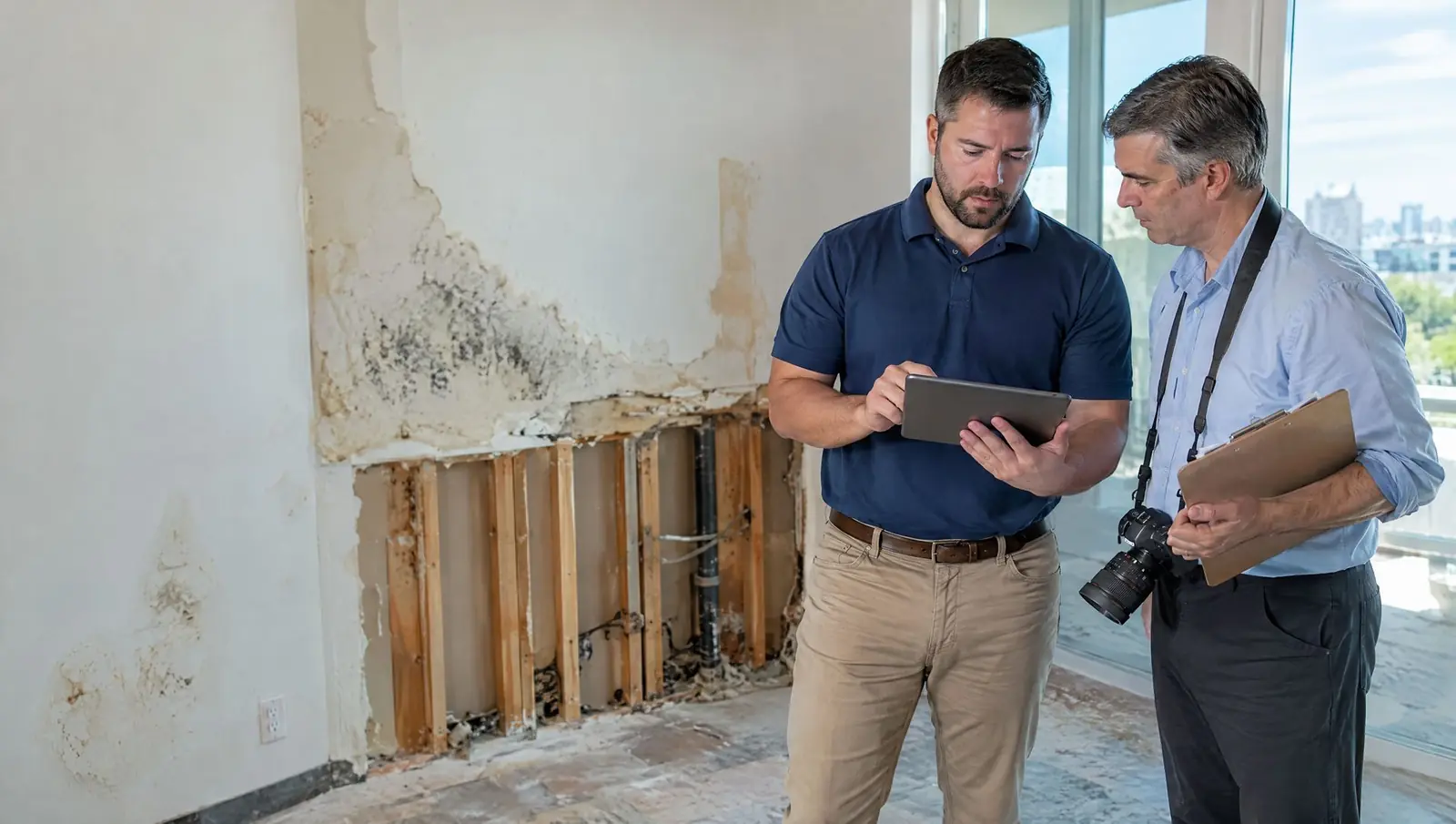
Our role is to make the loss easy to adjust. We take dated photos before demolition, record moisture readings through drying, separate standard-unit items from owner improvements where the information is available, and provide itemized scopes and invoices in a format adjusters recognize.
We do not decide coverage and we do not act as your adjuster. We provide the factual record and a clear scope so the claim moves faster.
What does condo insurance claims support in Toronto include?
- Photo and video documentation before, during and after work
- Daily drying logs and moisture readings
- Itemized scope of loss and estimate
- Separation of standard-unit items and owner improvements where known
- Support for adjuster site visits
- Final invoice package
Documents we prepare
Initial loss report
Cause, location, affected areas, photos and first readings.
Drying and mitigation log
Equipment, readings and dates for verifying the dry standard.
Reconstruction estimate
Line-item scope for rebuilding, with materials and labour.
How condo insurance claims support works, step by step
Report
Notify your insurer and the corporation as soon as possible.Document
We record the loss before changes are made.Scope
Prepare mitigation and reconstruction estimates.Adjuster review
Attend or support the adjuster's visit.Complete
Deliver final invoices and records.
How condominium insurance is structured in Ontario
A condominium involves at least two insurance arrangements. The corporation carries property insurance on the building and, typically, on the standard unit as originally built, along with liability coverage. Each owner should carry a unit owner policy that covers personal belongings, improvements and betterments, additional living expenses, personal liability, and often a deductible assessment endorsement for losses where the corporation passes on its deductible.
The Condominium Act, 1998 and the corporation's declaration and by-laws set out who is responsible for repairing which parts of the property and when the corporation may charge a deductible back to an owner. Because these provisions vary and have legal consequences, owners with significant losses should consult their insurer, their property manager and, if needed, a lawyer. We provide documentation, not legal or coverage advice.
The documents adjusters ask for
The more complete and organized the record, the faster the claim moves. These documents form the core of most claims:
- Photos and video of the damage taken before cleanup and during demolition.
- The cause of loss with a description and, if available, a plumber's or consultant's report.
- Moisture maps and drying logs showing readings, equipment placement and dates.
- An itemized estimate for mitigation and for reconstruction, with quantities and unit costs.
- A contents inventory listing affected belongings, with age, value and condition.
- Invoices and receipts for emergency work and extra living expenses.
- Correspondence with the corporation and other parties.
We prepare the restoration portion of this package and help you understand what else to gather.
Mitigation first: your duty to limit damage
Policies generally expect the insured to take reasonable steps to prevent further damage after a loss, and reasonable mitigation costs are typically covered. That is why emergency drying or board-up should not wait for final claim approval. Call your insurer or broker right away, tell them mitigation is under way and follow their instructions. We document each step, so the cost and necessity are clear when the adjuster reviews them.
Do not discard damaged materials until the adjuster has seen them or approved disposal, unless safety requires it. Where a material must be removed, photograph and measure it so the claim can be supported.
Working with multiple insurers and adjusters
A single loss may involve the corporation's insurer, your insurer, the insurer of the neighbour where the water originated, and independent adjusters for each. Scope differences and overlapping responsibility are common. We keep records by unit, separate standard-unit items from owner improvements where the information is available, and share documents with adjusters at your direction. We can attend adjuster inspections to explain what was found, why the work was done and what remains.
Disagreements often involve the scope or the price of repairs. Our estimates are itemized and use consistent pricing, which makes it simple to compare them to adjuster estimates and to explain differences.
Direct billing, payment and timelines
Payment arrangements vary. In some cases, the insurer pays the contractor directly; in others the owner pays and is reimbursed. We discuss payment terms before work begins and keep invoices aligned with the work completed. Claims take time, and approvals sometimes lag behind the work. For emergency mitigation, we generally proceed on your authorization, and we provide documentation so the insurer can process the claim. Reconstruction typically begins once the scope is agreed.
Standard unit, improvements and betterments
One of the most confusing aspects of condo claims is deciding what belongs to the corporation's coverage and what belongs to the owner's. Many declarations define the standard unit as the unit as originally built by the developer, with common finishes such as basic cabinets, flooring and fixtures. Upgrades made later, whether by a prior owner or the current one, are generally treated as improvements and betterments, and are the owner's insurance responsibility.
That distinction affects estimates. If a kitchen was upgraded from laminate to quartz counters and custom cabinetry, the corporation's insurer may pay for a standard kitchen while the owner's policy covers the difference. Our estimates separate line items when the unit's finish history is known, and we ask owners for renovation records, receipts or photos. Where information is missing, we flag it for the adjusters.
Because declarations differ, confirm the definition in yours. The property manager or the corporation's lawyer can clarify.
Deductibles and chargebacks
Corporations carry deductibles that can be large. Under Ontario's condominium legislation and many declarations, a corporation may charge back some or all of its deductible to the owner of the unit where a loss originated, depending on the circumstances. Owners therefore often carry deductible assessment coverage on their unit owner policy. Understanding this before a loss is helpful, and it is a reason to read your policy and speak to your broker.
During a claim, accurate determination of the cause and the origin unit matters because it can affect who bears the deductible. We document what we find and give that record to the corporation and adjusters, without drawing legal conclusions. If you are being asked to pay a chargeback and you are unsure, your insurer, broker or a lawyer can advise.
Common reasons claims are delayed, and how to avoid them
Delays usually come from missing information, not from disputes. Typical causes include late notice to the insurer, incomplete photo records, disposal of damaged materials before inspection, unclear scope between mitigation and reconstruction, and missing estimates. We help avoid these by documenting at each stage, providing a clear scope and giving adjusters what they ask for in a usable format. Keep your own file, too: emails, receipts, claim numbers and names of adjusters. A tidy file shortens the process and reduces the stress.
Questions to ask your insurer and contractor
Clear answers early reduce friction later:
- What does my policy cover? Ask your insurer about contents, improvements, additional living expenses and deductible assessment.
- What must I do to preserve my claim? Mitigate, document and report promptly.
- Who is the adjuster, and what do they need? Get contact details and a list of required documents.
- How is the estimate itemized? Itemization allows comparison with the adjuster's scope.
- How will payment work? Clarify direct billing versus reimbursement.
- Where does the corporation's insurance end? Your property manager can explain the declaration.
The short version
A clean claim starts with fast mitigation, thorough documentation and an itemized scope that separates what the corporation's policy and the owner's policy each respond to. CondoWorks supplies the factual record and the estimate, works with adjusters at your request and keeps units separate when a loss crosses suites. We do not decide coverage, but we remove the common causes of delay.
Condo insurance claims support across the Greater Toronto Area
We take insurance claims support projects in Markham, Downtown Toronto, Etobicoke and across the rest of Toronto and the Greater Toronto Area. Related services you may need alongside this one: emergency condo restoration, water damage restoration, fire and smoke damage restoration, condo restoration and restoration for property managers.
Ready to start? Request a free assessment, learn about CondoWorks or check our service areas.