
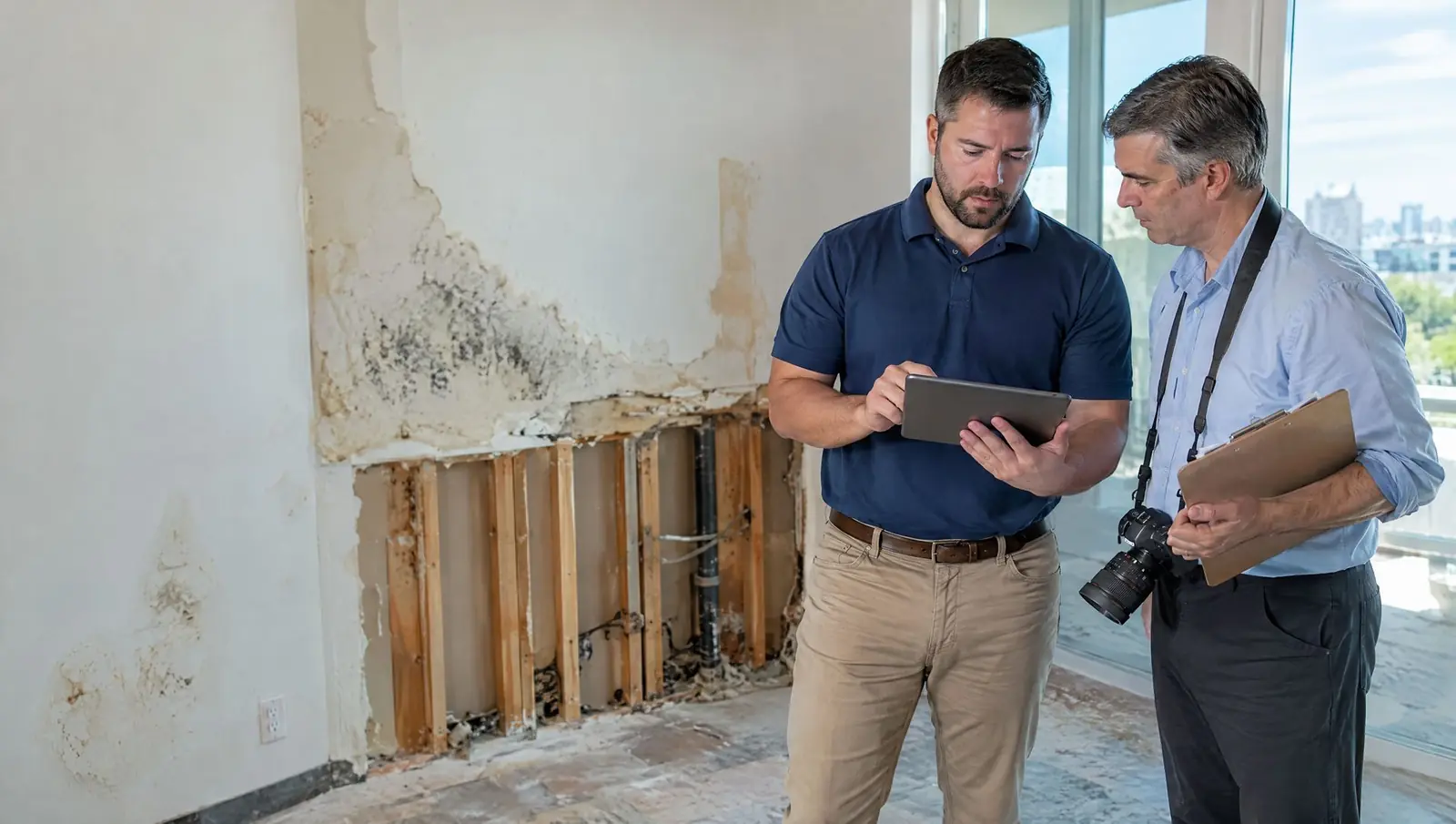
In Ontario, the condominium corporation's insurance usually covers the building and the standard unit, while the owner's policy covers improvements, belongings and extra living costs. Who pays for a given water loss depends on the declaration, the cause of the leak, and the deductible rules in the Condominium Act.
Key takeaways
- The corporation insures the common elements and the standard unit as defined in its documents. Owners insure upgrades, contents and their own liability.
- Section 105 of the Condominium Act lets the corporation recover its insurance deductible from an owner whose act or omission caused damage to a unit, up to the lesser of the repair cost and the deductible.
- Sewer backup and overland flood are usually optional add-ons on an owner's policy, so check your policy before you need it.
- Detailed photos, moisture readings and itemized invoices make a claim faster and easier to settle.
Who insures what in an Ontario condo?
A condominium has two layers of insurance. The corporation buys a policy on the building. Each owner buys a policy on their own unit and belongings. The line between the two is set by the corporation's declaration and by-laws, which define the "standard unit": the baseline finishes and fixtures that the corporation's policy rebuilds after a loss.
| Item | Usually covered by |
|---|---|
| Common elements: structure, roof, hallways, risers, shared plumbing | Corporation's policy |
| The standard unit: drywall, base flooring, basic cabinets and fixtures as defined | Corporation's policy |
| Improvements and betterments above the standard unit | Owner's policy |
| Belongings, furniture and personal property | Owner's policy |
| Extra living expenses while the unit is unusable | Owner's policy |
| The corporation's deductible, if charged to an owner | Owner (see below), often through owner insurance |
The exact split depends on your corporation's own documents, which differ from building to building. Ask the property manager for the declaration and any standard unit by-law, and read the "improvements and betterments" definition carefully.
What is the deductible chargeback under section 105?
The corporation's property policy has a deductible, often large. Under section 105 of the Condominium Act, a corporation can recover that deductible from an owner when damage to a unit is caused by that owner's act or omission, or that of a person the owner is responsible for. The charge is limited to the lesser of the cost of the repair and the deductible. Ontario courts have said no finding of negligence is required for this charge: the section turns on cause, not fault.
A corporation can also pass a by-law that widens the situations in which owners pay. Without such a by-law, recovery is limited to damage to a single unit caused by a person's act or omission. Amendments to section 105 have been proposed in the past, so check the current consolidated Act or ask the corporation's lawyer before relying on any commentary, including this page.
The practical lesson for owners: carry coverage that includes the deductible exposure, sometimes called deductible or "loss assessment" coverage, and make sure your policy limits are sensible. The practical lesson for boards: publish the deductible and the by-law rules clearly so owners are not surprised.
Who pays in common water damage scenarios?
- Leak from your own unit's plumbing or appliance: your unit and the unit below may be repaired through the corporation's policy up to the standard unit, with the deductible potentially charged to you under section 105. Your belongings and upgrades go through your policy.
- Leak from a common-element pipe or roof: the corporation generally repairs the common elements and the standard unit. You claim your belongings and upgrades on your own policy.
- Sewer backup or overland flood: these are separate, optional coverages on typical home and condo policies, according to the Insurance Bureau of Canada. Without that add-on, water from a backup or overland flood may not be covered. See sewage backup cleanup.
- Storm or envelope leak: repair of the building envelope sits with the corporation. Coverage depends on the corporation's policy wording and on whether the cause is a sudden event or gradual wear. See storm damage repair.
What should you do after a water loss?
Make safe and stop the water
Follow the steps in our first-hour checklist for a condo flood.Notify the property manager and your insurer
Do this quickly. Policies often require prompt notice, and the corporation needs to report to its own insurer.Document before you clean
Take dated photos and video of damage, source and belongings. Keep damaged items until the adjuster has seen them or approved disposal.Mitigate
Insurers expect you to take reasonable steps to limit further damage. A restoration crew's moisture logs and drying records show that you did.Keep everything
Save invoices, emails, claim numbers, the adjuster's name and any written scope. Ask for itemized, unit-by-unit invoices.
What documents do adjusters usually ask for?
- Photos and video of the loss, taken before cleanup.
- Moisture mapping, readings and daily drying logs from the restoration company.
- Itemized invoices for emergency services, drying, repairs and rebuilding.
- An inventory of damaged belongings with receipts or photos where available.
- Your policy, the declaration or standard unit description, and any by-law about deductibles.
- Correspondence with the property manager about the cause and source of the leak.
CondoWorks builds this record as part of the job and supports owners, managers and boards through insurance claims support. We do not decide coverage or negotiate on an insurer's behalf, but a clean file shortens the process. Property managers can also read our overview of restoration for property managers.
A short checklist for owners and boards
- Owners: read your policy for improvements, deductible coverage, sewer backup and overland flood. Keep photos and receipts of upgrades.
- Boards: review the corporation's insurance each year, confirm the deductible and communicate the chargeback rules to owners.
- Managers: keep a list of approved restoration vendors and a clear process for reporting leaks at any hour.
This page is general information, not legal or insurance advice. Coverage depends on the specific policy wording and the corporation's documents. For advice on a particular loss, speak to your insurance broker or a condominium lawyer.
Condo water damage insurance in Ontario: common questions
Sources and further reading
- Condominium Act, 1998 (Ontario e-Laws)
- Ontario Condo Law: insurance articles
- Miller Thomson: chargebacks and negligence under section 105
- Insurance Bureau of Canada: water damage brochure