
Last updated
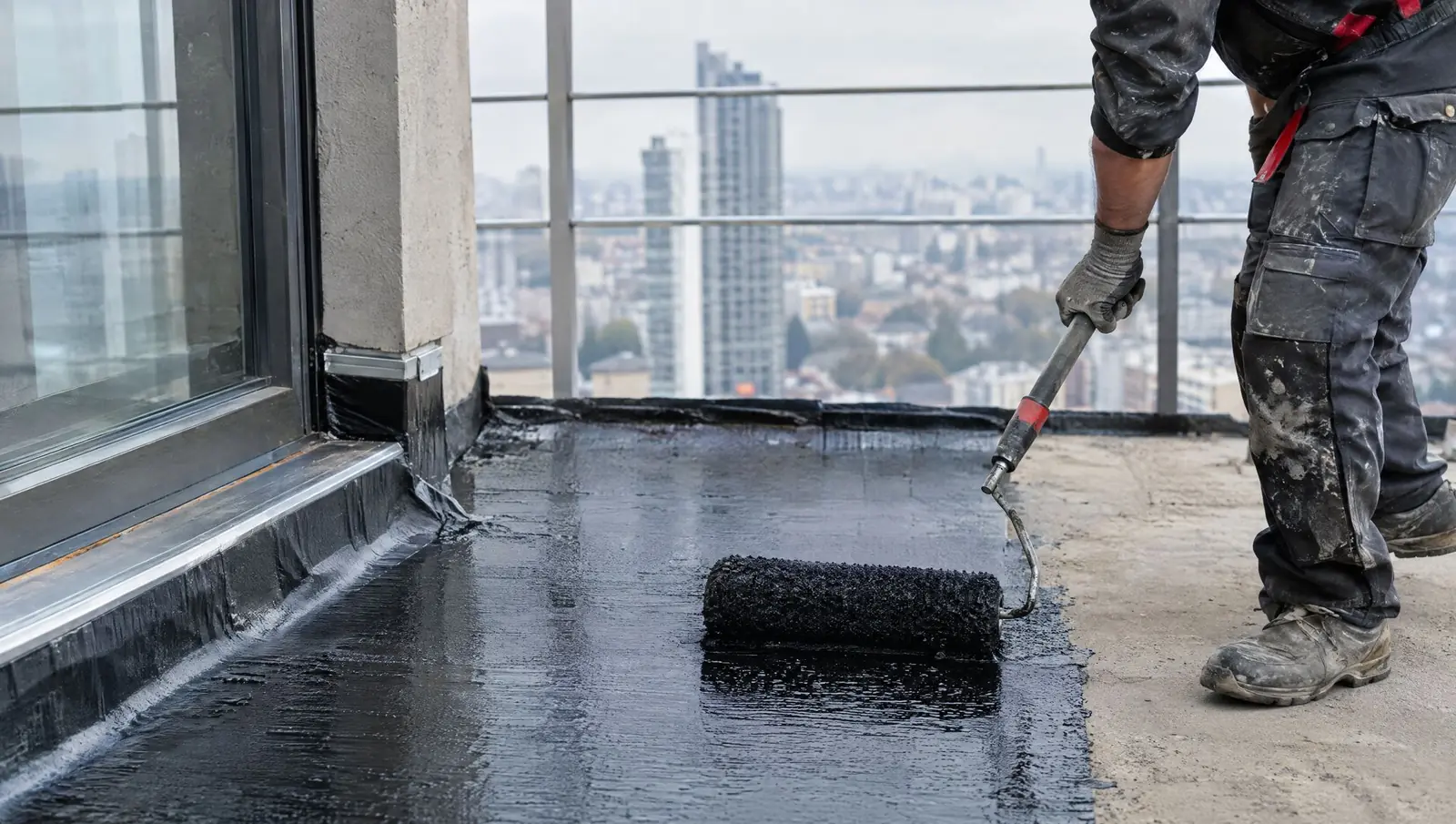
Balcony waterproofing in Toronto is the application of a membrane or traffic coating over a repaired slab to stop water, salt and freeze-thaw damage from reaching the concrete and the unit below. CondoWorks pairs waterproofing with concrete repair and correct drainage.
Water is what destroys a balcony. It enters through hairline cracks, failed sealants at the door threshold and the slab edge, and unprotected concrete. In Toronto's winters it freezes inside the slab and expands, breaking the surface from within. Meanwhile de-icing salts carried onto balconies accelerate corrosion of the reinforcing steel.
Waterproofing breaks that cycle. After repairs, a membrane or traffic-grade coating is applied with the correct slope to drains and edges, details are sealed at the door threshold, and drip edges direct water away from the façade.
Done correctly, waterproofing also protects what is below the balcony: ceilings of units on the floor underneath, soffits, and parking areas in podium buildings.
What does balcony waterproofing in Toronto include?
- Surface preparation and crack treatment
- Primer, membrane layers and reinforcement at joints
- Door-threshold and wall-junction flashing details
- Slope correction and drainage improvements
- Slip-resistant top finish in a choice of colours
- Drip edges and perimeter sealants
Signs a balcony needs waterproofing
Ponding water
Puddles after rain indicate slope problems and constant moisture exposure.
Efflorescence and stains
White deposits or rust marks on the slab or soffit show water moving through concrete.
Leaks below
Staining on the ceiling of the unit below is a serious sign that the membrane has failed.
How balcony waterproofing works, step by step
Inspect
Check slope, cracks, edges and thresholds.Prepare
Clean and profile the slab, repair defects.Prime and membrane
Apply primer then waterproofing layers to specified thickness.Detail
Treat door thresholds, drains and wall junctions.Top coat and cure
Apply the finish coat and allow proper cure before foot traffic.
How balcony waterproofing systems work
A balcony waterproofing system is a layered assembly that stops water entering the slab while allowing the surface to be walked on. In most cases it comprises a primer that bonds to the cleaned concrete, a continuous liquid-applied or sheet membrane, and a wear coat with aggregate for slip resistance and UV protection. At the perimeter and the door threshold, flashings and sealants connect the membrane to the wall, the door sill and the slab edge, so water cannot travel around its edges.
Not every system suits every balcony. Liquid-applied polyurethane and similar membranes are common on residential balconies because they flow around penetrations and bond well to concrete. Other systems use different chemistries or add reinforcing fabric at joints. The right choice depends on the condition of the slab, the amount of foot traffic, the building's exposure and the corporation's budget and maintenance expectations.
Slope and drainage: the part most coatings cannot fix
A good membrane on a flat slab still leaves water sitting on the surface, and standing water shortens the life of any coating. Balconies should slope gently away from the building toward the edge or a drain. On many older balconies, settlement, patching and repeated recoating have reduced or reversed the slope.
We check slope with a level and water test. Where it is inadequate, the repair uses a polymer-modified topping or a levelling mortar to restore fall before waterproofing. We also inspect drains, scuppers and edge details, clean or replace clogged outlets and confirm that water discharges where it will not stain the façade or fall on a balcony below.
These details are inexpensive compared with the cost of failure, and they are why waterproofing should be designed, not just applied.
Door thresholds, walls and other weak points
Most balcony leaks that reach units are not through the slab centre. They occur at junctions. The areas we inspect and detail with particular care are:
- Door sill. The point where the sliding door frame meets the slab. A missing or cracked sealant lets water run into the wall cavity.
- Wall-to-slab junction. The membrane must turn up the wall and be protected by flashing or cladding.
- Guard posts. Each post anchored through the membrane is a possible leak path unless it is sealed with a proper boot or flashing.
- Slab edge. A drip edge prevents water from running back under the slab.
- Expansion and control joints. Joints need flexible sealant and reinforcement in the membrane.
Careful detailing at these points is more important than the thickness of the main coating.
Maintenance and service life
Even a well-installed membrane is a maintained surface. Foot traffic, furniture, planters, sun and cold gradually wear the top coat. We recommend a yearly visual check by the corporation or its consultant, and prompt repair of any cracks, scrapes or loose edges before water can enter.
Residents can help by keeping drains clear, using furniture with pads, avoiding steel de-icing tools on the surface and using non-corrosive de-icers sparingly. When the wear layer thins or becomes dull, a recoat at the manufacturer's recommended interval restores protection at a fraction of the cost of replacing the entire system. We provide a maintenance sheet with each project describing what to inspect and how often.
Warranty terms vary by system and installer, and we provide them in writing for the specific product used.
What affects cost and timing
The main factors are the area of the slab, the amount of concrete repair needed first, the system chosen, the number of penetrations and details, and access. Weather also matters because membranes need dry, moderate conditions to cure. A building-wide program is normally priced per balcony after a survey, and phased so that each balcony returns to use as soon as it has cured. We give a written estimate once we have seen the balconies and understood the repair scope.
Choosing between membranes: a practical comparison
Boards and owners often ask which system is best. The honest answer is that it depends on conditions. Liquid-applied polyurethane membranes with an aggregate wear layer are widely used on balconies because they are seamless, flexible and conform to irregular surfaces, though they need careful application and cure time. Cementitious coatings are rigid and breathable but less able to bridge cracks. Epoxy-based systems offer hardness and chemical resistance but may be less flexible in cold climates. Sheet membranes provide consistent thickness, with seams and edges requiring careful detailing.
Warranties, installers' experience and the engineer's specification matter as much as the product name. We recommend choosing systems with documented performance in cold, freeze-thaw climates, with manufacturer support and approved applicators. We install according to manufacturer instructions, because deviations such as thin application, wrong cure conditions or poor surface preparation cause early failures.
Preparation is most of the work
Preparation takes more time than application and determines performance. The slab must be clean, dry and sound. We remove loose material, old coatings and contaminants by shot blasting, grinding or similar mechanical methods, and we vacuum thoroughly. Cracks are routed and sealed, spalled areas repaired and the surface profile checked against the manufacturer's requirements. Moisture content is tested before applying coatings, since trapped moisture can cause blistering.
Weather is also part of preparation. Rain, high humidity and low temperatures prevent proper cure, so we monitor forecasts, protect the work area and schedule application in suitable windows. Residents can help by keeping the balcony clear and avoiding use until cure is complete.
Questions to ask about balcony waterproofing
Before approving a system, ask:
- What is the system and its track record in freeze-thaw climates? Local performance matters.
- How will you prepare the slab? Shot blasting or grinding, repairs and moisture testing.
- How will you fix slope and drainage? Water must leave the surface.
- How will thresholds and posts be detailed? Junctions cause most leaks.
- What are the cure conditions? Weather dictates scheduling.
- What warranty and maintenance are required? Get both in writing.
The short version
Waterproofing succeeds when preparation, slope, junction details and weather windows are all handled correctly, and the system is chosen for a freeze-thaw climate. It protects the slab, the unit below and the investment in the repairs and guards. CondoWorks combines waterproofing with concrete repair and railing replacement so each balcony is treated as one durable system, not a series of patches.
Balcony waterproofing across the Greater Toronto Area
We take balcony waterproofing projects in Mississauga, Richmond Hill, Downtown Toronto and across the rest of Toronto and the Greater Toronto Area. Related services you may need alongside this one: balcony restoration, balcony railing replacement, condo leak detection, condo exterior restoration and parking garage restoration.
Ready to start? Request a free assessment, learn about CondoWorks or check our service areas.