Last updated
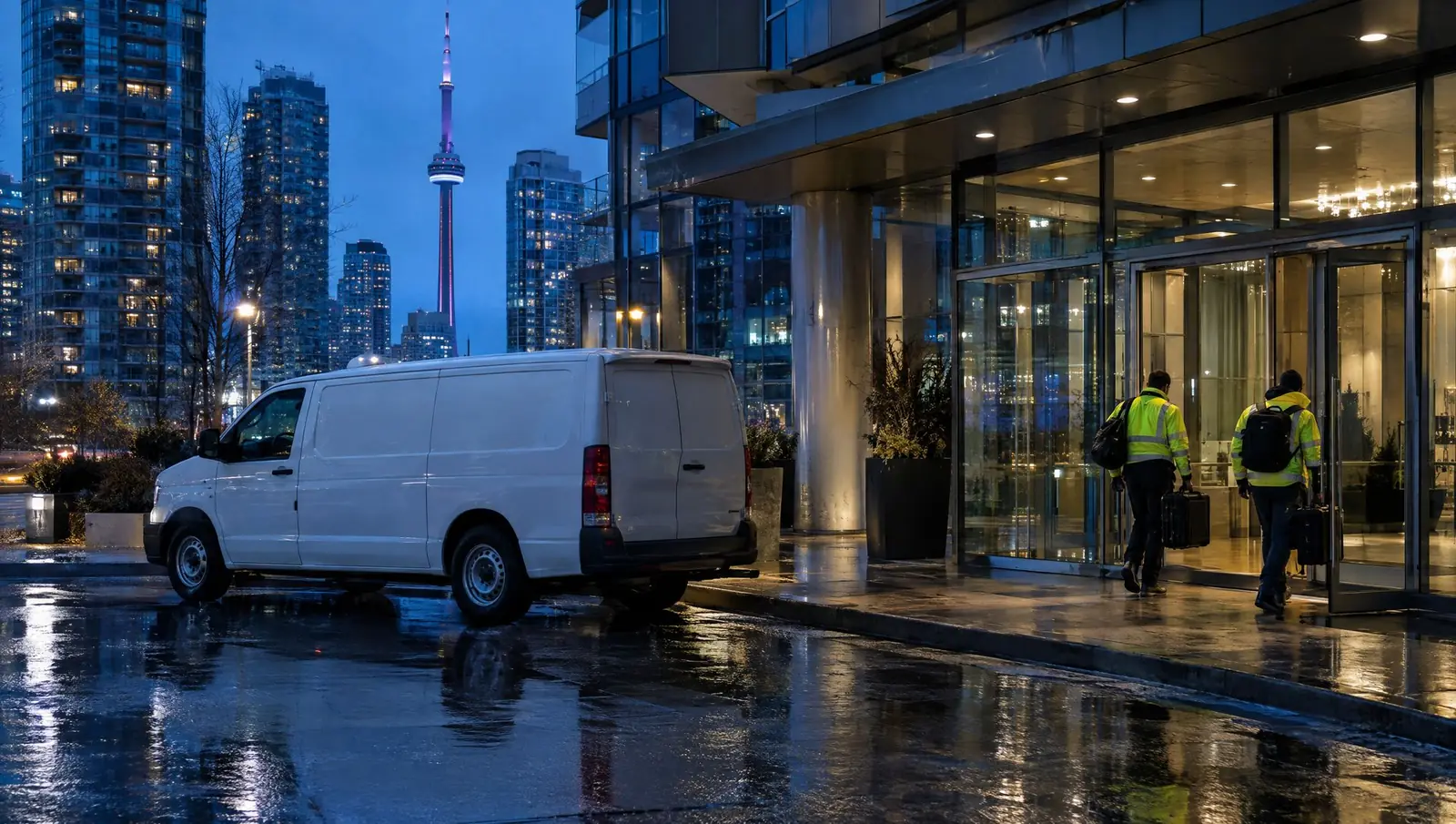
Emergency condo restoration in Toronto is the immediate response to flooding, fire, sewage and storm damage in a condominium, aimed at stopping damage before it reaches neighbouring units. CondoWorks answers its emergency line 24/7 and sends crews to high-rise buildings across the GTA.
In a condo, the first hours decide the outcome. Water moves into the unit below, smoke travels through ventilation, and moisture trapped in walls starts supporting mold within a couple of days. Fast, correct mitigation limits the damage to one unit instead of five.
Our emergency line is answered at any hour. We dispatch a crew, coordinate with the property manager or security for access, stop the source of damage where possible, and start extraction, containment or board-up. Once the building is stable, we scope the full restoration.
Because we also rebuild, the same company that dries the structure carries on to repair it. That avoids gaps in responsibility between mitigation and reconstruction.
What does emergency condo restoration in Toronto include?
- 24/7 dispatch and building coordination
- Water extraction and emergency drying equipment placement
- Smoke and soot containment, air scrubbing and board-up
- Sewage isolation and safe removal of contaminated materials
- Contents protection and pack-out where needed
- Initial photos and moisture readings for your insurer
Call us right away for
Burst pipes and floods
Water coming through ceilings or walls from a unit above or a failed supply line.
Fire and smoke
Damage from a fire in your unit or a neighbouring one, including firefighting water.
Sewage and storm
Backed-up drains, roof or window failure during storms.
How emergency condo restoration works, step by step
Call
Tell us the building, unit, and what happened. If it is safe, shut off the water supply.Dispatch
A crew heads to site and we alert property management for access.Stabilize
Stop the source, extract water, contain contamination, protect contents.Dry and document
Place equipment, take readings and photos.Plan restoration
Present a scope and schedule for repairs.
The first hour: what to do before the crew arrives
The actions you take before a restoration crew arrives can reduce the damage significantly. If anyone is hurt or there is fire, smoke or an electrical hazard, leave the unit and call 911. If the situation is a water loss and it is safe, take these steps in this order:
- Shut off the water supply to the unit, or to the affected fixture. If you cannot find the valve, call building management or security, who know the riser shut-offs.
- If water is near outlets, appliances or the electrical panel, do not touch them. Switch off power at the breaker only if you can reach it without standing in water.
- Move valuables, electronics, documents and small furniture to a dry area, and lift rugs and soft items off wet floors.
- Take photos and short videos of the damage and the source before anything is moved.
- Notify building management, so they can check units below and alert the corporation's insurer if required.
- Call us. We start planning the response while you secure the unit.
Avoid using household vacuums on water, and do not turn on ceiling fixtures that have water behind them. Do not try to remove sagging ceilings yourself, as they can collapse.
What our emergency response includes
An emergency call is the start of a structured sequence. Our crew is dispatched with equipment appropriate to the type of loss and, on arrival, checks in with building staff and sets up protection for elevators and corridors. We assess safety first, then the extent of damage, and begin work in this order of priority: stop the source if it has not been stopped, protect people and property, contain the area, extract water or contaminants and set up drying or air filtration.
Within the first day, you receive a summary of what was found, what was done and what comes next, with photos. Where the damage has reached other units, we inform the property manager so those owners can be contacted and assessed. Once the emergency is controlled, we prepare a scope for repairs and discuss how to proceed with you and your insurer.
Why speed matters: the timeline of damage
Damage from water, smoke and sewage progresses on a clock, which is why a call in the first hours is worth more than one a day later. In general terms:
- First hours. Water spreads and soaks into drywall, baseboards, flooring and ceilings below. Quick extraction limits how much is absorbed.
- Within a day or two. Wet porous materials begin to swell and warp, metal fixtures can tarnish and mold can begin to develop in damp conditions.
- After several days. Mold growth can become established, odours set into materials and secondary damage such as rotting of subfloors, delamination of cabinets and corrosion appears.
- Smoke and soot. Residues can etch glass and metal and become harder to remove as they cure.
These stages are not exact, but they explain why early mitigation reduces the scope of reconstruction.
Working with building management during an emergency
An emergency in a condominium involves several people simultaneously: the unit owner, the property manager, security or concierge, the fire department in some cases, the insurer and neighbours. We keep our part of the response organized. We confirm access procedures when we call, check in with security on arrival, report any building system issues we find, such as a failed valve or a leaking riser, and give management the information needed to inform affected residents.
We also adapt to building rules during an emergency. Elevators may be reserved for the response, fire-safety systems may need to be isolated by authorized personnel and some areas may be restricted until clearance is given. Knowing these procedures in advance is a reason for managers to pre-register us as a vendor.
After the emergency: from mitigation to rebuild
Once the building is stable, we move to the next phase: drying and monitoring, selective demolition of materials that cannot be saved and reconstruction. Because the same company handles each stage, scope, documentation and schedule carry across, and you have one point of responsibility. We provide an itemized estimate, discuss options and timing and coordinate with your insurer and the corporation where appropriate. The final walkthrough confirms that the unit has been restored to the agreed condition, and you receive the documentation for your records.
Safety hazards to watch for during an emergency
Emergencies produce hazards that are not always obvious. Water in contact with electrical outlets, panels or appliances can energize surfaces. Ceilings that hold water can collapse without warning. Wet floors are slippery. After a fire, structural elements may be weakened, and smoke and soot irritate the airways. Sewage and other contamination carry biological risks, and mold may begin to appear in damp areas within days. Keep everyone, including pets, out of affected areas until professionals have assessed them, and do not enter rooms with sagging ceilings or standing water near live electricity.
What to ask when you call an emergency line
When you call us or any emergency provider, these questions help set expectations:
- When will the crew arrive? You should get an estimated time and a name.
- What should I do until you arrive? Good dispatchers give safe, specific steps.
- Will you coordinate with building management? Access and rules should be handled by the contractor.
- What will you do first? Expect the source, containment and extraction in that order.
- Will I get documentation today? Photos and a first summary should follow quickly.
- Who will handle the rebuild? Clarify early whether the same company continues.
The short version
In an emergency, speed and order both matter. Make people safe, stop the source if you can, call building management and call us. We dispatch a crew, protect your unit and the common areas, contain and extract, and set up drying or filtration. Once the building is stable we scope the repair and carry it through, with documentation your insurer and the corporation can rely on.
Emergency condo restoration across the Greater Toronto Area
We take 24/7 emergency response projects in Mississauga, Richmond Hill, Downtown Toronto and across the rest of Toronto and the Greater Toronto Area. Related services you may need alongside this one: water damage restoration, fire and smoke damage restoration, sewage backup cleanup, storm damage repair and condo insurance claims support.
Ready to start? Request a free assessment, learn about CondoWorks or check our service areas.