
Last updated
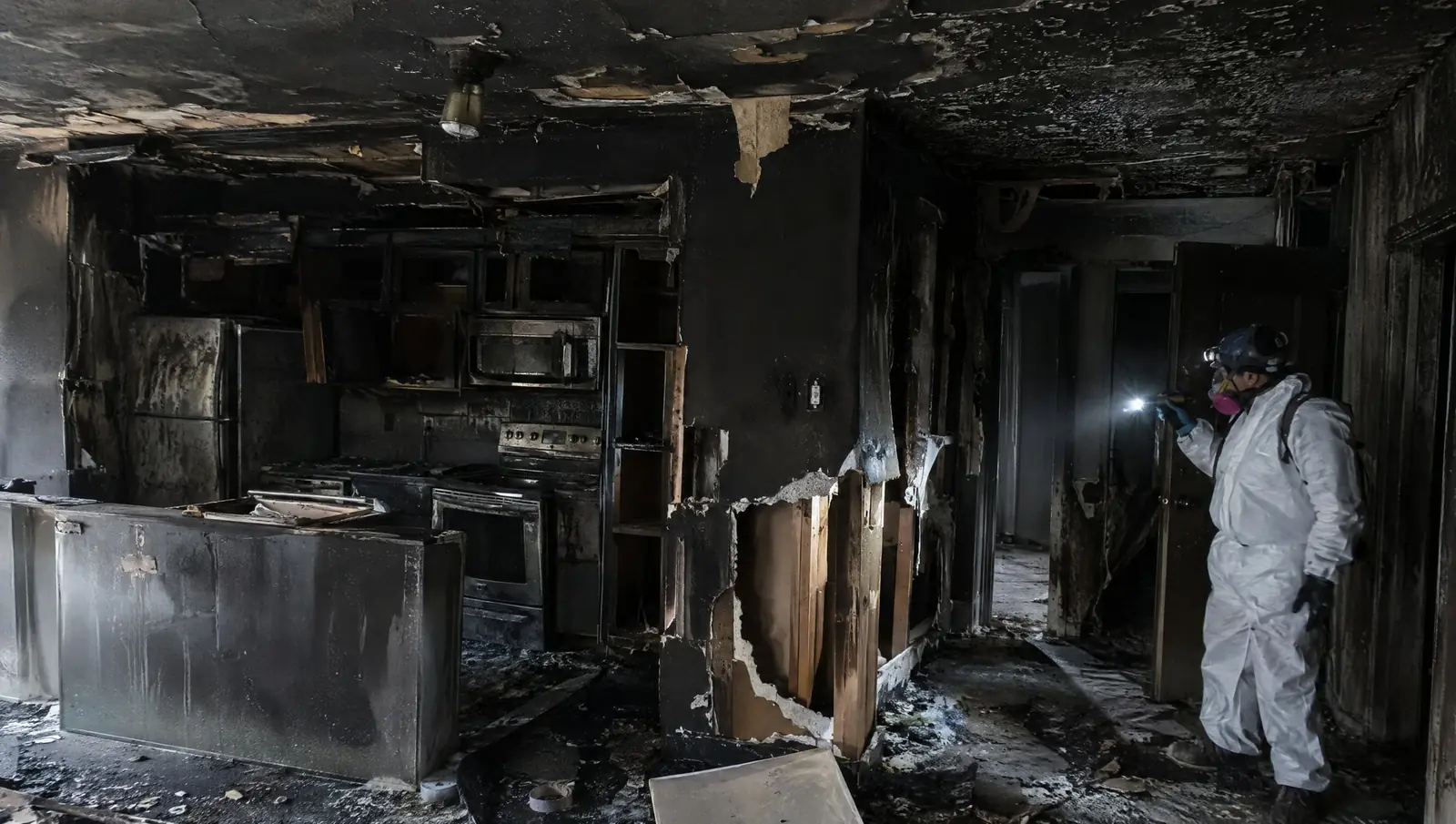
Fire and smoke damage restoration in Toronto is the securing, soot removal, odour treatment, firefighting-water drying and rebuilding that follows a fire in a condominium. CondoWorks restores the burned unit and cleans neighbouring suites and corridors affected by smoke.
A fire in one condo unit affects the whole floor and sometimes the whole building. Smoke moves through ventilation, corridors and shafts, soot settles on every surface, and firefighting water soaks the units below. Restoration needs to address fire, smoke and water together.
We start by securing the unit, then assess what can be cleaned and what must be replaced. Soot is removed from walls, ceilings and contents with methods suited to each material, and odour is treated at the source with cleaning, sealing and air filtration. Where structure or finishes are damaged, we rebuild.
When your unit is untouched by flames but smells of smoke, cleaning and deodorizing is often enough. We assess honestly before recommending replacement.
What does fire smoke damage restoration in Toronto include?
- Board-up and temporary protection
- Soot and smoke residue removal from surfaces and contents
- Odour control, sealing and air scrubbing
- Firefighting water extraction and drying
- Structural repair and finish rebuilding
- Content cleaning and pack-out coordination
What fire restoration involves
Direct fire damage
Charred structure, finishes and fixtures that must be removed and rebuilt.
Smoke and soot
Residue that stains and smells even in rooms the fire never reached.
Water from firefighting
Water in the unit and units below that needs fast drying.
How fire smoke damage restoration works, step by step
Secure
Board up, protect and assess safety.Remove
Take out damaged and unsalvageable materials.Clean
Remove soot and residue from surfaces and contents.Deodorize
Treat air and materials for smoke odour.Rebuild
Restore structure and finishes.
What fire and smoke do to a condo unit
A fire has three effects that need different treatments. Direct fire damage burns or weakens structure and finishes. Heat damage warps, melts and cracks materials well beyond the flames. Smoke and soot travel in air, coat surfaces and penetrate porous materials. The type of fuel determines the residue: protein fires from cooking leave thin, greasy residue with strong odour, while synthetic materials produce sticky, smeary soot that is difficult to clean.
In a condo, firefighting adds water and sometimes sprinkler discharge, which damages the unit and those below. The building's ventilation can carry smoke into corridors and other units. Restoration therefore requires coordinated work: structural repair, soot cleaning, odour control, water extraction and drying.
Soot cleaning methods and how we choose them
Different residues and surfaces call for different methods. Our technicians test small areas before choosing a process. Common techniques include:
- Dry sponge cleaning for light, dry soot on walls and ceilings, which lifts residue without adding moisture.
- HEPA vacuuming to remove loose particles from surfaces and fabrics before wet cleaning.
- Wet cleaning with detergents for oily or sticky residues on hard surfaces.
- Specialty cleaning for electronics, glass and metals, which can be damaged by the acids in soot if left too long.
- Sealing of stained surfaces and framing with sealants designed to lock in residual odour before repainting.
- Replacement where cleaning cannot restore the material, such as heavily charred drywall or smoke-saturated insulation.
Odour removal that lasts
Smoke odour is made of microscopic particles embedded in surfaces and in the air. Spraying fragrance covers it for a short time; the particles remain and the smell returns, especially in warm weather. Lasting removal involves cleaning or removing the source materials, treating the structure and cleaning the air.
We combine HEPA and carbon air scrubbers to remove airborne particles, thermal or cold fogging in suitable cases, sealing of framing and substrates and replacement of porous materials such as insulation or carpets. The ventilation system serving the unit may also need cleaning if smoke entered it. We confirm results by inspection and by asking residents to assess the smell, since it is the final test.
Contents, pack-out and temporary housing
Many belongings can be restored after a fire. Hard items are cleaned on site or in a facility. Clothing and textiles can be laundered or dry-cleaned with specialized processes. Electronics, documents and artwork may need specialist care. We inventory contents, photograph them and identify what can be restored, which also supports your insurance claim.
Pack-out is the process of removing contents from the unit to protect them during repairs, and returning them afterwards. It also lets crews work without obstruction. Many policies cover temporary accommodation while the unit is uninhabitable, and we give you a realistic timeline so you can plan.
Rebuilding and coordination with the building
After cleaning, reconstruction proceeds with drywall, insulation, flooring, cabinets, doors, paint and fixtures. Electrical and plumbing damage is repaired by licensed trades, and fire-stopping and fire-rated assemblies are restored to code. The building's fire-safety systems may require inspection and re-certification, which the corporation arranges through the appropriate vendor. We coordinate with the property manager, the fire-safety contractor and your adjuster so each step is documented and approved.
After the fire department leaves: securing the unit
When firefighters finish, the unit is not safe to occupy by default. Doors may be forced or removed, windows may be broken, water may still be flowing or pooled, and the electrical system may be unsafe. Our first actions are to confirm with the fire department and building management that we may enter, then to secure the unit by repairing or boarding openings and protecting it from weather and unauthorized entry.
We also check for ongoing hazards: hot spots or smoldering insulation, structural weakness in floors or ceilings, standing water near electrical panels and damaged gas lines. A licensed electrician and, if applicable, a gas fitter inspect and make systems safe. Only then do cleaning and demolition begin. This sequence protects workers and prevents further damage.
Notification of the corporation and insurers follows, with photographs and a first-day report so everyone has the same information.
Smoke and soot migration into neighbouring units
Even if only one unit had flames, others may have smoke damage. Smoke moves through gaps in walls and ceilings, around pipes, through ventilation systems and via corridors. Neighbouring suites may show a smell, a film on surfaces or soot at vents and light fixtures. Because owners often underestimate the problem at first, we recommend that adjacent units be inspected and that any residue on surfaces is tested before it is wiped away.
Cleaning neighbouring units generally involves HEPA vacuuming, wiping of surfaces, cleaning of HVAC components and air filtration. Replacement of filters and cleaning of fan coil units prevents smoke from re-entering the air. In corridors and common areas, we coordinate with management to clean walls, carpets and ceilings as needed so residents are not exposed to residue.
Reconstruction standards and fire safety
Rebuilding after a fire must restore fire-safety features, not just appearance. Fire-rated walls and ceilings, firestopping at penetrations, smoke alarms and door assemblies must be returned to their original ratings. The corporation's fire-safety consultant or contractor may need to test or certify alarm and sprinkler systems before the unit is reoccupied. We coordinate those inspections and keep records of materials and methods used, which supports building records and insurance.
Questions to ask a fire restoration company
Fire restoration involves many decisions, so ask:
- How will you secure the unit? Board-up, weather protection and safety checks come first.
- What do you clean and what do you replace? The answer should depend on material and testing.
- How will you treat the odour? Cleaning, sealing and filtration beat masking.
- What about neighbouring units and corridors? Smoke travels, and cleaning should extend to where it went.
- How will contents be handled? Ask about inventory, pack-out and storage.
- Will fire-safety features be restored? Ratings and firestopping must be reinstated.
The short version
After a fire, the sequence matters: make the unit safe, protect it from weather and further loss, remove damaged materials, clean soot and treat odour at its source, dry any firefighting water, and rebuild with fire-safety features restored. CondoWorks coordinates those steps together with the property manager, fire-safety vendors and adjusters, so you are not managing several companies while also dealing with the loss itself.
Fire smoke damage restoration across the Greater Toronto Area
We take fire & smoke damage projects in Richmond Hill, North York, Scarborough and across the rest of Toronto and the Greater Toronto Area. Related services you may need alongside this one: emergency condo restoration, water damage restoration, condo odour removal and air filtration, condo insurance claims support and asbestos testing and abatement.
Ready to start? Request a free assessment, learn about CondoWorks or check our service areas.