
Last updated
Condo odour removal and air filtration in Toronto is the process of locating the source of smoke, mold, sewage or other smells, treating or removing it and cleaning the air with HEPA and carbon filtration. CondoWorks also checks ventilation paths between units.
Odour is a symptom. Masking it with sprays does not work, because the source remains in porous materials, hidden cavities or ventilation. Lasting results require identifying where the smell originates and treating or removing it.
In a condo, odour also moves between units through shared ventilation, plumbing chases and gaps in walls. We check adjoining suites and exhaust systems when necessary.
Our approach: locate the source, clean or remove affected materials, treat surfaces, seal where needed, and use HEPA and carbon air scrubbers to clean the air during and after the work.
What does condo odour removal air filtration in Toronto include?
- Source identification and material inspection
- Cleaning, sealing and removal of affected porous materials
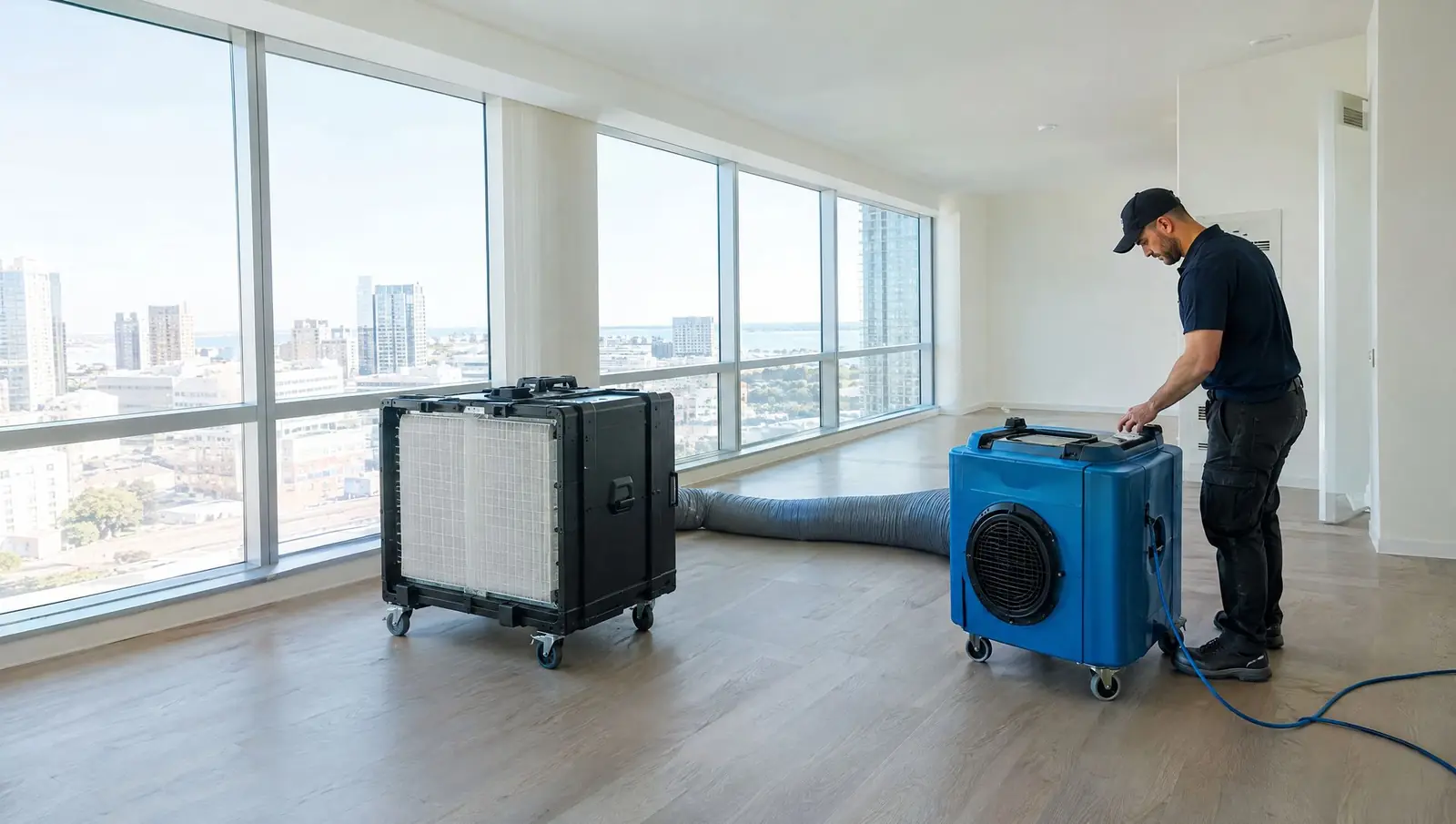
- HEPA and activated carbon air scrubbing
- Ventilation and duct inspection
- Treatment of fabrics, carpets and contents where appropriate
- Follow-up check after treatment
Odours we address
Smoke and fire
Residue in finishes and ventilation after a fire.
Mold and moisture
Musty smell from hidden damp materials.
Sewage, pets and decomposition
Contamination in flooring, subfloor and walls.
How condo odour removal air filtration works, step by step
Locate
Find the source and path of the smell.Remove
Take out materials that cannot be cleaned.Treat
Clean, seal and treat remaining surfaces.Filter
Run HEPA/carbon air scrubbers.Confirm
Re-check after treatment.
Why odours persist
Odour molecules are very small and attach to surfaces, absorb into porous materials and move through air. Materials such as drywall, insulation, carpet, wood and textiles hold odour, then release it slowly as temperature and humidity change. That is why a smell may seem to disappear in winter and return in summer, or reappear after cleaning if the source remains.
In condominiums, shared walls, plumbing chases, kitchen and bath exhaust shafts and mechanical ventilation can carry odour between units. Cigarette smoke, cooking fumes, cannabis, pet odour and a neighbour's hoarding are common reasons for complaints. The first job is to identify where the smell begins and how it moves.
Common sources and what works for each
The treatment depends on the source:
- Smoke and fire odour. Clean residue from surfaces, seal substrates, replace insulation and carpets and treat air with HEPA and carbon filtration.
- Mold and mildew. Find the moisture, remove affected materials and clean. See our mold remediation service.
- Sewage and drain odours. Check traps, vents and drain lines, and clean contaminated materials after any backup.
- Pet and urine odour. Remove or treat contaminated flooring and subfloor, and use enzyme-based products designed to break down urine.
- Tobacco and cannabis. Clean and seal walls and ceilings, replace porous materials and clean ventilation components.
- Decomposition. Remove contaminated materials and treat the structure and air as part of biohazard cleanup.
How air scrubbing and filtration work
Air scrubbers draw room air through filters and return clean air. HEPA filters capture particles, including smoke, dust and mold spores, down to very small sizes. Activated carbon filters adsorb gases and odour molecules. Running these machines during and after cleaning and demolition keeps airborne contamination from settling and from travelling to other areas. They also help during the project by keeping the air breathable.
Scrubbers do not remove an odour source that is still present in the structure. They are part of a plan that includes removing or cleaning the source. We size equipment to the volume of the space, position it to create airflow across affected zones and monitor over time.
Ventilation and shared pathways in condominiums
Many odour complaints involve more than one unit. Common pathways are shared exhaust shafts, gaps around pipes and electrical penetrations, door undercuts and corridor pressurization. Sealing penetrations, adjusting door seals and cleaning or servicing exhaust components can reduce transfer significantly. Some of these items belong to the corporation, so we coordinate with the property manager and the building's mechanical contractor.
When a neighbour's unit is the source, the solution may require access to both units and cooperation. We document conditions and recommend measures so the corporation can enforce its rules or request remediation.
What to expect and how we verify results
After treatment, we re-inspect the unit under normal conditions, and we ask you to confirm that the odour is gone. Because sensitivity to smell varies, we also check with an inspection of the source areas, and, where appropriate, with moisture and surface readings. Some projects require follow-up visits after seasonal changes. We explain what we did, what remains and what you can do to maintain results, such as ventilating, controlling humidity and avoiding re-contamination.
Diagnosing an odour problem step by step
A systematic investigation saves money because it avoids treating the wrong thing. We start with an interview: when was the odour first noticed, does it change with weather, time of day or the building's mechanical operation, and where is it strongest? Then we inspect the unit, beginning at the strongest area, checking floors, walls, ceilings, closets, cabinets, drains and vents. We use moisture meters and thermal imaging to rule out hidden dampness, and we check traps in floor drains and rarely used fixtures, since dry traps allow sewer gas into the unit.
If the odour crosses between units, we investigate pathways, including shared walls, plumbing chases, electrical penetrations and ventilation ducts. Smoke testing of air paths and pressure differences, carried out with the property manager's permission, can show where air moves. This evidence guides decisions about sealing, balancing and cleaning and tells the corporation what elements within its responsibility need attention.
Cleaning, sealing and replacing materials
Once the source is found, treatment follows a hierarchy. If the material can be cleaned, we clean it. If cleaning does not remove the odour, we seal it. If neither works, we remove and replace it. Hard, non-porous surfaces such as glass, metal, tile and sealed concrete clean well. Painted drywall can often be cleaned and sealed with a stain-blocking primer designed to lock in odour. Unfinished wood, insulation, carpet underlay and upholstery frequently hold odour and are replaced.
Sealing is a legitimate tool when used after cleaning, not instead of it. A sealer applied to a dirty surface only traps contamination. We also replace filters in the unit's fan coil or ventilation equipment and clean ducts where odour has entered them, since returning air picks up residual smells.
Finally, we recommend paint and flooring products with low odour and low VOC content for the rebuild, so new materials do not add a new smell.
Preventing odours from returning
Prevention depends on the source. After a smoke or pet issue, regular ventilation and keeping humidity moderate help. After a plumbing or drain odour issue, running water in seldom-used fixtures keeps traps filled. For cooking and garbage odours, a working range hood, closed lids and regular disposal limit build-up. In buildings with shared odour pathways, the corporation may check door seals and exhaust balance during maintenance. We provide a short maintenance note with our recommendations at the end of the project.
Questions to ask about odour treatment
Odour treatments range from effective to cosmetic. These questions separate them:
- How will you find the source? A real process includes inspection, moisture checks and tracing of air paths.
- Will you remove or replace materials? Porous materials that hold odour often need replacing.
- What equipment will you use and for how long? HEPA and carbon scrubbers should be sized to the space and run for an adequate period.
- Do you address ventilation? Ducts, fan coils and exhaust shafts can reintroduce smells.
- Will you re-inspect afterwards? A follow-up check under normal conditions confirms results.
- What if the odour returns? A confident provider explains how they handle it.
The short version
Odour is solved at the source: locate it, clean or remove what holds it, treat the structure, filter the air and check ventilation pathways between units. Masking agents and one-time treatments rarely last. CondoWorks follows that sequence, documents what was found and returns for a check, so you can be confident the smell is gone because the cause is gone, not because it has been covered.
Condo odour removal air filtration across the Greater Toronto Area
We take odour removal & air filtration projects in Richmond Hill, North York, Scarborough and across the rest of Toronto and the Greater Toronto Area. Related services you may need alongside this one: fire and smoke damage restoration, condo mold remediation, sewage backup cleanup, biohazard and trauma cleanup and water damage restoration.
Ready to start? Request a free assessment, learn about CondoWorks or check our service areas.