
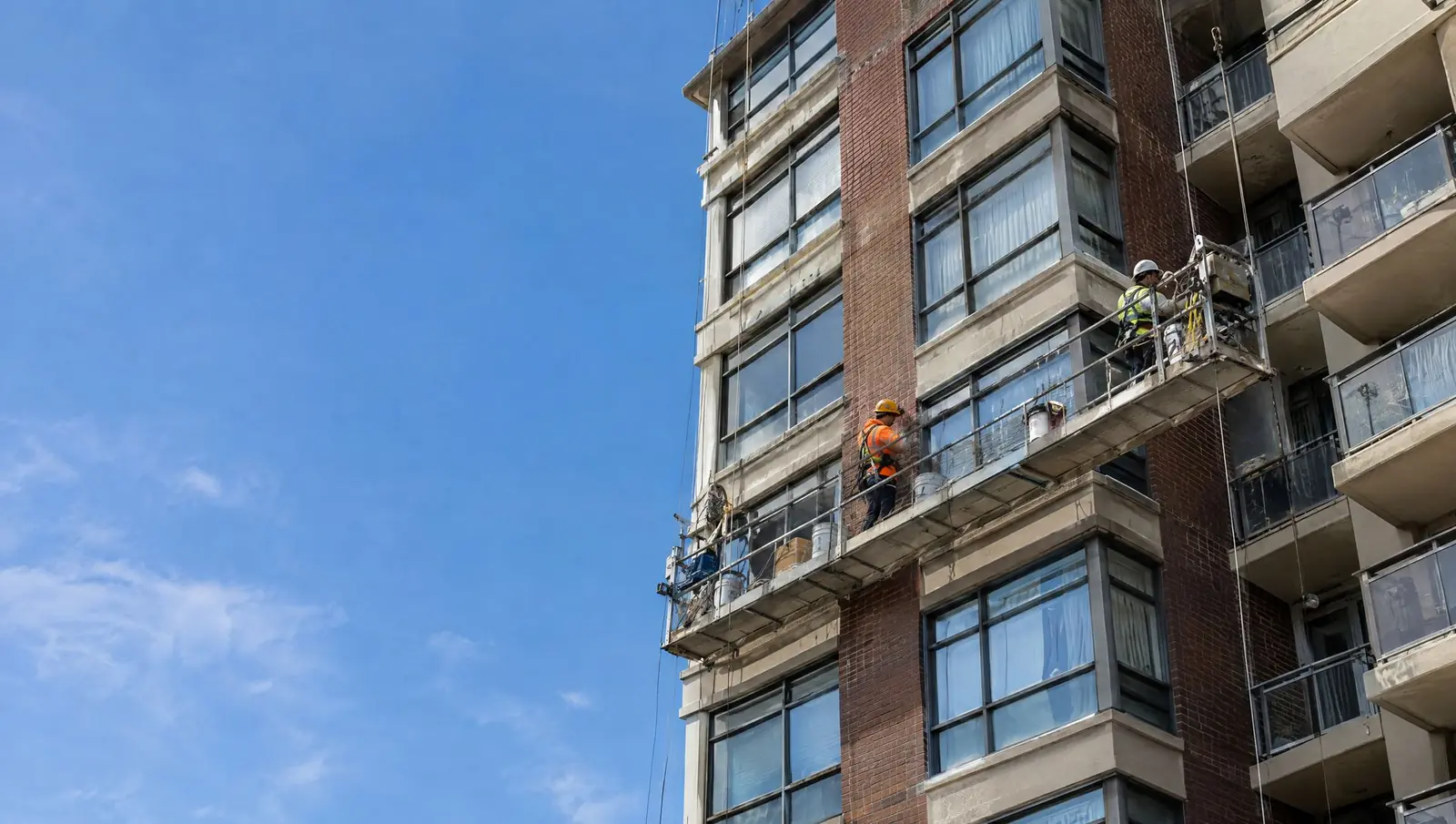
Freeze-thaw damage happens when water gets into concrete or masonry, freezes, expands and cracks the material from inside, over and over through the winter. On condo buildings it shows up first at balcony edges, parapets, brick faces and garage ramps. Catching it early keeps a small repair from becoming a restoration program.
Key takeaways
- Water is the cause. Concrete and masonry survive freezing when they stay dry or are well made, and fail when water keeps getting in and out.
- The first places to check are balcony slab edges, parapets, ledges, brick joints, stairs and parking ramps, because they stay wet and get de-icing salt.
- Cracks, flaking surfaces, rust stains and efflorescence are early signs. A visual walk-around in late fall is cheap and useful.
- Fixing drainage, sealants and small cracks before winter limits damage. Widespread or structural deterioration needs an engineer.
How does freeze-thaw damage happen?
Concrete and brick are porous. Rain and melting snow soak into tiny pores and cracks. When the temperature drops below freezing, the water turns to ice and takes up more space, which pushes on the surrounding material. When it thaws, the water moves deeper. Repeated across many winter cycles, this opens cracks and breaks off surface layers.
Research on concrete durability, including work at Iowa State University, also finds that de-icing salts can make freeze-thaw damage worse, which matters for balconies, stairs, sidewalks and garages that get salted. Concrete that was made with entrained air and finished well resists this better, which is why older or poorly finished surfaces tend to fail first.
Where does damage show up on a condo building?
| Location | Why it is exposed | What to look for |
|---|---|---|
| Balcony slab edges and undersides | Water collects and runs off the edge | Flaking edges, cracks, rust stains, ponding. See balcony restoration |
| Parapets and roof edges | Wet from above and from the sides | Cracks, loose coping, staining below |
| Brick and masonry faces | Joints and bricks absorb water | Spalled brick faces, open joints, white deposits |
| Stairs and entrance slabs | Salted and always wet | Scaling, flaking, exposed aggregate |
| Garage ramps and slabs | Salt-laden water from vehicles | Surface loss, cracking, leaks below. See parking garage restoration |
What are the early warning signs?
- Hairline and map cracking in concrete, especially at edges and corners.
- Scaling or flaking, where the top layer of concrete peels off in thin pieces.
- Spalling, where larger pieces break away and expose steel reinforcement underneath.
- Rust stains that bleed through the surface, which suggest the steel is corroding.
- Efflorescence, the white powdery deposit that shows water is moving through the material.
- Loose or cracked mortar and bricks that can move or fall.
Anything that could fall from height is a safety issue. Cordon off the area below and call an engineer; do not wait for spring.
What can boards do before and during winter?
Walk the building in late fall
Photograph balconies, parapets, brick faces, stairs and ramps. Compare with last year's photos if you have them.Clear drains and drainage paths
Blocked balcony drains, roof drains and scuppers send water where it should not go. Check that water drains away from walls and slabs.Seal small cracks and failed sealant
Open joints and cracked sealant let water in. Repair them with materials suited to the surface.Manage de-icing salt
Use salt sparingly, sweep it up when it is no longer needed, and tell residents not to apply salt on balconies unless the corporation allows it.Book an engineer for anything suspicious
Winter is a good time to arrange condition surveys and tender documents, so repair work can start in spring.
When does repair become restoration?
Small, isolated damage can often be repaired locally: patching spalls, sealing cracks, replacing sealant. When damage is widespread, reaches the reinforcing steel, or repeats in the same places, patching tends to fail and the building needs a planned program. That usually combines concrete repair, waterproofing and drainage fixes, and sometimes guard or masonry work. See our guide to condo exterior restoration and the guide on balcony restoration vs replacement.
The engineer's findings should feed the corporation's reserve fund planning. Our article on reading a reserve fund study shows where these items appear and how to phase them.
What can residents do?
- Keep balcony drains clear of leaves and debris so water does not pool against the slab.
- Shovel snow off balconies where the rules allow it, and never use a metal tool that can gouge the surface.
- Do not apply rock salt on balcony slabs or stairs unless the corporation says it is acceptable.
- Report new cracks, flaking, rust stains or loose railings to the property manager with a photo and the suite number.
- Do not pick at or hammer loose concrete. Report it so it can be assessed.
Common mistakes boards make
- Treating stains as cosmetic. Rust stains and efflorescence often mean water is moving through the material or steel is corroding.
- Patching without fixing the water source. A patch over a leaking joint or blocked drain tends to fail within a season or two.
- Waiting for spring. Winter damage compounds. Surveys and tender documents can be prepared in winter so repairs start as soon as the weather allows.
- Skipping records. Dated photos of each inspection make it easier to see how fast damage is progressing and to justify budgets to owners.
How CondoWorks can help
CondoWorks restores balconies, facades and garages on condominium buildings across Toronto and the GTA. We can walk the building with your property manager, point out where freeze-thaw damage is starting, and explain what a repair program would involve. To arrange a site visit, request a free assessment.
This page is general information. Exposure and damage vary by building, so rely on an engineer's assessment for structural decisions.
Freeze-thaw damage: common questions
Sources and further reading
- Iowa State University: Evaluation of non-corrosive deicing materials and treatments (TR-471)
- Canadian Condominium Institute: Maintenance and Repairs
- Condominium Act, 1998 (Ontario e-Laws)